
The Strategy
Adaptation is the strategy.
Buying essential rental housing at distressed prices while America becomes a nation of long-term renters.
Investor Thesis
Nitya Capital is an opportunistic investor. The aim is not simply to own good assets but to create opportunity through financial engineering and disciplined underwriting, where the work of capturing value is done at acquisition, before a deal ever closes.
America's housing affordability crisis is creating a larger, more permanent renter population, while capital market distress is allowing experienced operators to acquire essential rental housing at discounted prices.
Structural Rental Demand
Homeownership is increasingly unaffordable, pushing more households into rental housing for longer periods.
Distressed Acquisition Pricing
Multifamily assets are available at discounts because of capital structure distress, not because the housing need has disappeared.
Operational Value Creation
NOI can be improved through occupancy, collections, expense control, capex, technology, and better management.
How Nitya Buys
A different kind of acquisition pipeline.
“We are not buying distressed real estate. We are buying institutional-quality real estate from distressed balance sheets.”
Today's market offers a rare opportunity. Many fundamentally sound assets are under pressure because prior owners used short-term or floating-rate debt. The real estate is still needed, the residents still need housing, and the markets still have long-term demand, but the capital structures are broken. Nitya's strategy is to buy these assets at a reset basis, invest in operations and targeted capital improvements, improve occupancy and collections, and preserve attainable housing for working families. This is not just a real estate trade. It is an investment in the future of American housing.
Vertical Integration
Built to perform through every market cycle.
Nitya Capital works hand in hand with an in-house property management partner, so leasing and renovation decisions stay aligned with investor outcomes from acquisition through exit.
No third-party handoffs, no diluted accountability: one team, from acquisition to exit, across the country.
Today's market rewards that discipline. Home prices have detached from incomes, mortgage rates remain elevated, and existing owners are locked into low-rate loans, freezing the for-sale market and pushing a growing share of households toward long-term renting. At the same time, assets financed with short-term and floating-rate debt earlier this decade are under pressure, opening a window to acquire well-located rental housing below replacement cost.
We have operated through the last cycle rather than around it, managing communities through Hurricane Harvey, COVID-19, and four years of elevated interest rates. That continuity is the foundation we underwrite from.
Acquiring well is only half of the model. The difference is the infrastructure to execute the business plan once the keys change hands: in-house asset management and on-site teams that improve occupancy, tighten collections, and reinforce stability property by property. Vertical integration is the strategy because owning the operation is what carries a disciplined acquisition through the hold.
Division One: Capital
Nitya Capital
The investment side of the model, in sequence: monitor high-growth markets, identify opportunities, raise equity, then acquire and exit.
Capital Raising
Nitya raises equity only from accredited investors and high-net-worth individuals, a base of repeat accredited investors who reinvest across multiple deals. Institutional partners enter the capital stack through debt financing only. Individual investors participate alongside Nitya Capital, the general partner, whose institutional-grade experience guides every deal.
For investors: institutional-grade deal access at an individual minimum.
Acquisitions
We believe the best way to invest in this shift is not by building expensive new luxury product, but by acquiring existing multifamily communities at distressed prices and improving them through active management. The acquisitions team screens submarkets nationwide against the firm's population, jobs, and supply criteria, then underwrites conservatively, passing on far more deals than it closes.
For investors: a pipeline filtered by discipline, not deal volume.
Institutional Relationships
A vertically integrated general partner.
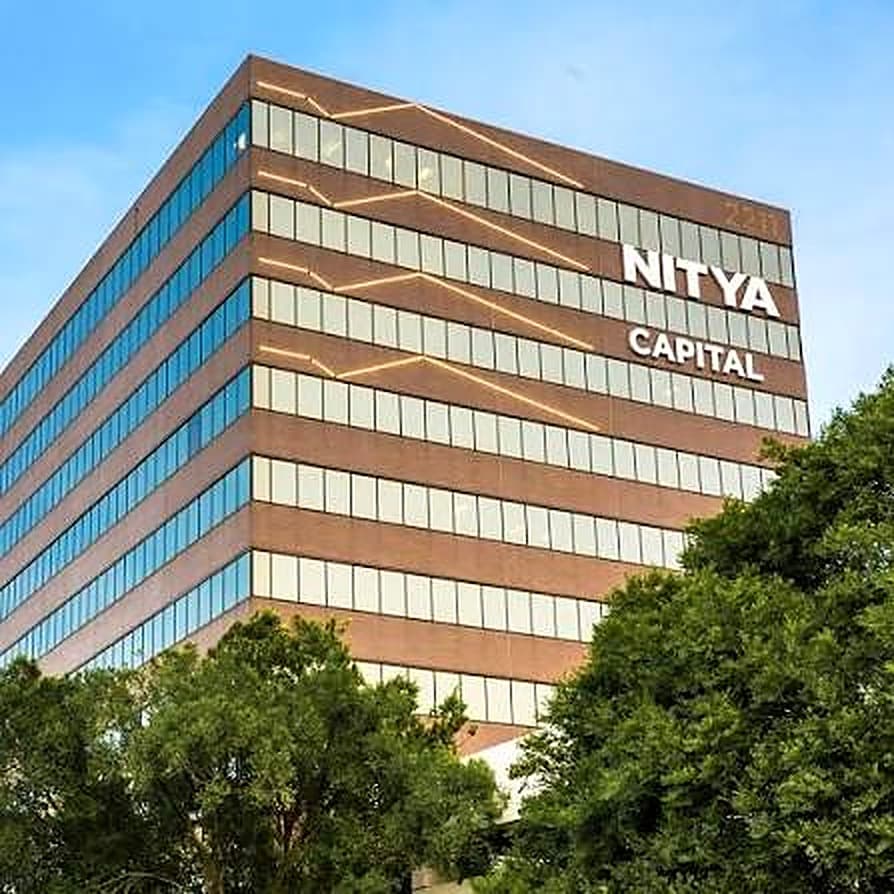
Nitya Capital oversees a $3.0 billion real estate platform, with acquisitions, asset management, and property management under one roof. Direct relationships with institutional lenders and capital partners position the firm to source well-located rental housing and execute its business plan across market cycles.






Alongside other leading institutional partners.
Division Two: Operations
In-house asset management & property management
The operating side of the model: executing renovations, leasing units, and managing every community in-house for the life of the hold.
Asset Management
Our in-house asset managers own each property's business plan, including renovation scope, budget, and hold-period performance, with direct visibility into on-site operations rather than monthly third-party reports.
For investors: the business plan is executed by the team that wrote it.
Property Management
Our on-site teams handle leasing, maintenance, and resident service for every community Nitya owns, keeping operating knowledge and accountability close to the capital.
For investors: no handoffs, no diluted incentives, one answerable team.
Operational Turnarounds
Occupancy, before and after.
Occupancy at acquisition versus today on recent lender-sourced acquisitions, executed by our own on-site teams.
Harbor Sky
Portland, OR
- At Acquisition
- 77%
- Current
- 93%
- NOI increase in 12 months (client-reported)
- 70%
Tides at Spring Mountain
Las Vegas, NV
- At Acquisition
- 61%
- Current
- 90%
Tax Efficiency
Real estate is a tax-efficient asset class.
Real estate is one of the few asset classes where the tax code recognizes that buildings wear out over time. Through depreciation, an owner may deduct a portion of a property's value each year across its useful life, producing passive losses on paper even while the asset continues to operate.
For investors whose income is largely passive, drawn from prior investments rather than wages, those passive losses may offset passive gains elsewhere in their portfolio. This is a feature of how real estate is taxed, not a return the investment itself produces.
Every investor's tax situation is different. This is educational information, not tax advice: whether these losses can offset your income depends on your individual circumstances, and you should consult your own tax advisor before investing.
How Capital Moves
The Nitya Cycle
Every investment follows the same six-step lifecycle, executed by one accountable team from the first market screen to the final sale.
Identify
We screen submarkets and individual assets nationwide against our population, jobs, and supply criteria, narrowing a broad pipeline to opportunities that clear our underwriting bar.
Fundraise
We raise equity from accredited investors and leverage debt from institutional partners, structuring the capital stack before closing so every dollar has a purpose.
Acquire
We move decisively once diligence confirms the thesis, using our track record and capital relationships to close efficiently and competitively.
Execute Business Plan
Our in-house asset managers and on-site teams renovate units and common areas and lease up the property, turning underwriting assumptions into physical improvements without a third-party handoff.
Solidify Stability
Our acquisitions are structured for resilience at the operating level we inherit, bought on favorable financing terms that do not depend on a quick turnaround. Our on-site teams then drive occupancy, collections, and expense discipline, growing net operating income beyond the initial renovation lift.
Exit
We underwrite exit timing as carefully as acquisition, selling into strength to return capital and realize the value created through the hold.
Choose how to begin.
Ready to invest
Review current offerings and start the subscription process with our investor relations team.
Invest With UsWant to talk first
Schedule a conversation about the firm, the strategy, and whether it fits your portfolio.
Book a CallJust getting to know us
Get market commentary and firm updates by email, no commitment, unsubscribe anytime.
Join Our Investor List